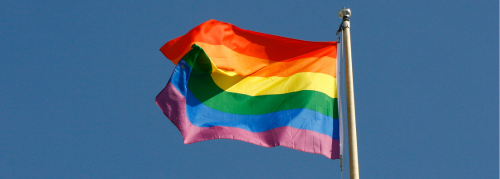
June is Pride Month, and every year I find myself reflecting on what Pride has meant to me at different points in my life.
When I was younger, I used to go to Amsterdam Pride and watch the Canal Parade. A friend of mine had a boat parked in the canal, and we’d spend the day watching the floats slowly pass by. There was loud music, colourful confetti, blue skies, sunshine, people dancing, laughing, cheering, and celebrating. The floats represented all sorts of different parts of the LGBTQ+ community, from charities and advocacy groups to political organisations and kink communities.
I remember looking around at the sheer number of people who had gathered to celebrate and feeling something that was difficult to put into words at the time. It was a mixture of disbelief, relief, safety, and hope.
There was something almost surreal about seeing so much acceptance concentrated in one place.
At that stage in my life, I spent a lot of time worrying about whether I would be accepted for being gay. I worried that people would reject me. I worried that friendships would change. I worried that I wouldn’t find a boyfriend. I was even self-conscious about my voice because I thought it sounded “too gay” Looking back, I can see how much fear I was carrying around with me.
Standing there at Pride, I would often find myself looking around and thinking:
“See? There’s no reason to be scared. No one cares.”
For perhaps the first time, I felt like I wasn’t different. Everyone felt like a friend. It made me hopeful that things really were changing.
Growing Up Feeling Different
One of the things I’ve reflected on more as both a therapist and a gay man is the psychological impact of growing up feeling different. For many LGBTQ+ people, there can be a period where being queer doesn’t just feel like one part of who you are. It can feel like a problem that needs solving.
When I read The Velvet Rage by Alan Downs, one idea in particular stayed with me. He writes about how many gay men grow up feeling as though they have some kind of inherent deficit that they need to compensate for.
I think that idea resonates with a lot of people because it often shows up in subtle ways.
I see it in perfectionism. I see it in people trying very hard to fit in or be someone they’re not. I see it in self-deprecating jokes about being queer or in the way people casually attribute perceived flaws to their sexuality. Sometimes it shows up in the pressure to achieve. To have the perfect career, the perfect body, the perfect relationship, or to be the funniest person in the room. Sometimes it shows up in alcohol, drugs, or sex becoming ways of escaping feelings of shame.
The underlying message often sounds something like:
“If I can just be good enough at everything else, maybe being queer won’t matter.”
The tragedy is that this often moves people further away from themselves rather than closer.
Internalised Homophobia and Rejecting Parts of Ourselves
I can see some of this in my own life as well. I’ve always been quite sensitive and empathetic. I never really felt like I fitted in with “the boys,” and I became aware of feeling different quite early on. I can also be quite camp, but for a long time that side of me only emerged when I felt psychologically safe.
It simply didn’t feel safe to be myself.
Looking back, I think some of that came from the messages I had absorbed about masculinity, femininity, and what it meant to be a man. If being gay was associated with being feminine, and being feminine was seen as something lesser, then naturally there was a part of me that wanted to distance myself from that.
But I also think some of it was projection.
Most people, at some point in their lives, have had the experience of walking down the street convinced that everyone is judging them for being weird, awkward, unattractive, or somehow not good enough. My version of that was tied to being gay.
The interesting thing is that when I look back honestly, people have mostly been kind, which means the fear often lived inside me more than it existed around me.
The Search for Role Models
One of the reasons Pride feels so important to me now is because I understand how powerful it can be to see people who are comfortable being themselves. As a teenager, I was always looking for a role model. I wanted an older gay man who could tell me that everything was going to be okay. Someone who could show me that there was a future beyond the fear and uncertainty I was experiencing. That it was possible to live a healthy and happy life.
Unfortunately, that search sometimes made me vulnerable. I ended up in situations where I was abused because I was looking for guidance and acceptance in places that weren’t safe. And it wasn’t until my late twenties, when I started therapy myself, that something shifted.
My therapist was a healthy, happy, self-accepting gay man. For the first time, I felt like I’d found the role model I’d been searching for all along. Working with him changed my life profoundly. In many ways, it was the catalyst for me becoming a counsellor myself.
What I Notice in My Work With LGBTQ+ Clients
Supporting the LGBTQ+ community is deeply personal to me. Partly because I know what it feels like to struggle with shame and internalised homophobia. Partly because I know how important it can be to meet someone who helps you see yourself differently.
When LGBTQ+ clients sit across from me, I think they are often looking for the same things many people are looking for when they enter therapy: safety, trust, understanding, and hope.
They want a space where they can be fully themselves without worrying about being judged, questioned, corrected, or rejected.
I also think authenticity matters.
Being an openly gay therapist communicates something without me necessarily having to say it directly. It communicates that it’s possible to be queer and happy. That authenticity is a strength rather than a weakness. That you don’t have to change yourself in order to be accepted.
And once people being towards self-accepted, the one thing I often notice is that there is a kind of softening. Their queerness becomes less of a battleground and more of an integrated part of who they are. They stop viewing everything through the lens of rejection. They become less likely to assume that every uncomfortable interaction is connected to their sexuality. There is often less shame and more self-compassion.
They’re no longer trying to outrun who they are.
Authenticity, Connection, and Pride
One of my favourite ideas comes from Gabor Maté, who talks about the tension between authenticity and attachment. If we’re surrounded by people who reject who we are, we often learn to hide parts of ourselves in order to maintain connection. We sacrifice authenticity because belonging feels necessary for survival.
For LGBTQ+ people, this can mean hiding our sexuality, our gender expression, our relationships, or parts of our personality in order to feel accepted.
The problem is that when we consistently hide parts of ourselves to maintain connection, we often end up rejecting ourselves in the process. Ideally, we shouldn’t have to choose between authenticity and belonging.
We should be able to have both.
I think that’s one of the reasons Pride continues to matter. Not because it’s perfect or because every company that changes its logo for a month is suddenly an ally or because every Pride event gets everything right, but because it creates spaces where people can experience authenticity and connection at the same time. It shows people that they are not alone and that there is a future.
And for some people, especially those who are still struggling with shame or fear, that can be life-changing.
So I guess that’s why I still feel grateful that Pride exists.
It reminds me of the privilege of living somewhere that has become increasingly accepting during my lifetime. It reminds me that there are still LGBTQ+ people around the world who face persecution, imprisonment, violence, and even death for being themselves. It reminds me that coming out is not always safe and that context matters.
Most of all, it reminds me why the work I do matters.
If my younger self standing on that boat in Amsterdam could see me now—a married gay man, a therapist, and someone who is comfortable enough to talk openly about internalised homophobia, shame, and self-acceptance—I don’t think he would quite believe it.
But I think he would feel relieved.
And I think he would hope it was true.
Leave a Reply